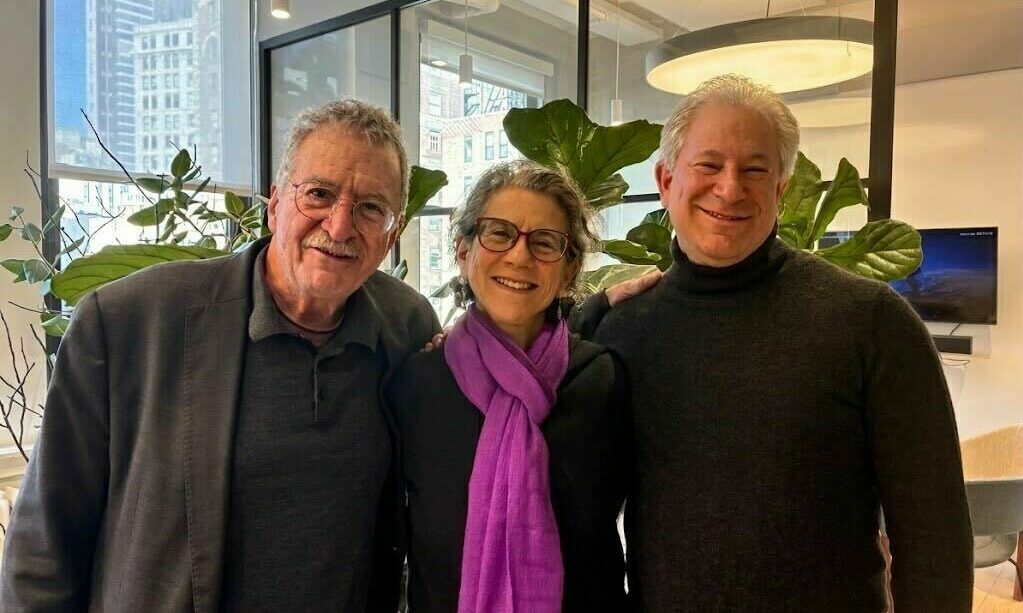
Last year, I shared our vision for the deepening partnership between Incandescent and Minds at Work. We have now brought the firms together fully as one business and one team. Minds at Work will continue to serve as an institute and community for Immunity to Change® practitioners and as the home of our work on deliberately developmental organizations. Incandescent will apply the combined capabilities of both firms to transformational work at the organizational level. Rather than write a traditional merger announcement, this piece shares the deeper why behind this combination and frames some of the questions we'll be thinking about in the chapter ahead.
The Gap Between Intention and Action
Bob Kegan has a riddle he likes to pose to audiences. Fourteen frogs are sitting on a log. Three of them decide to jump into the water. How many frogs are left on the log?
Most people want to say eleven. Bob suggests fourteen is the better answer — because there is a very large difference between deciding to do something and actually doing it.
That gap — between sincere intention and actual change — is one of the most consequential facts about human life. It plays out in every New Year's resolution abandoned by February, every heartfelt commitment to lead differently that dissolves under the pressure of the next quarter, every strategy that everyone agrees is right but that nonetheless stalls in ways no one quite understands. The change industry has largely treated this gap as a problem of motivation, alignment, or willpower. Bob and his partner of more than four decades, Lisa Lahey, made a different discovery. The gap isn't about a deficit of resolve. It's about a hidden immune system of the mind — one that works brilliantly, automatically, and invisibly to protect us from the very changes we say we most want to make.
The Anatomy of a Breakthrough
When I first encountered Bob and Lisa's work more than twenty-five years ago, what struck me was the premise: it may be nearly impossible to bring about any important change in a system or organization without changing ourselves. As our firms have grown closer, I've been even more struck by how naturally Incandescent's view of strategy execution — that the strategies worth pursuing are the ones that require an organization to become something it is not yet — connects to the Minds at Work view of human development — that we are meaning-making creatures capable of ongoing growth, and that this growth can be woven into the daily fabric of work. We arrived at the same insight from different altitudes.
But what has been most striking of all is not the convergence of ideas. It's the wisdom embodied in how Minds at Work practices. There is a craft to this work — a combination of intellectual precision and human warmth — that I've come to believe is the most distinctive and valuable thing Bob and Lisa have built.
The best way I can make this craft visible is to point to a moment when it was practiced in public. In late 2022, Lisa appeared on Brené Brown's Dare to Lead podcast for a two-part conversation. Brené expected to discuss the immunity to change. What actually happened was that Lisa invited Brené to do the work — live, on air. Brené's willingness to go through this process in public makes visible a craft that would otherwise be impossible to describe from the outside. I'd encourage anyone reading this to listen to both episodes.
Brené came in with a change she wanted to make: committing to more disciplined, regularly scheduled meetings with her teams. A simple, practical goal. Lisa asked Brené to name the things she actually does that work against this goal. Brené started listing them — canceling meetings, taking herself off meeting lists, saying yes to individual requests at the expense of team gatherings — and you could hear the surprise in her voice as she recognized the sheer volume of behaviors actively undermining the very thing she said she wanted.
A lesser practitioner would offer advice at this point. Lisa did something different. She guided Brené toward what was being protected by staying away from those meetings. What emerged was a deep commitment to preserving her creative life — to not drowning in the operational so that she could remain the kind of leader who has space to think and make things. And underneath that, a big assumption: that discipline and creativity are fundamentally incompatible. That if she shows up to the meetings, she loses the thing that makes her most alive.
Lisa didn't tell Brené she was wrong. She helped her see her own system — the foot on the gas and the foot on the brake, both real, both sincere. The path forward wasn't more willpower. It was examining whether the assumption connecting them was actually true, and then running small experiments in real life to find out.
Brené described the experience as "revelatory" and also as "scary, hard, honest." Both descriptions tell you something about the depth of what Lisa had surfaced in barely an hour.
From Change to Metamorphosis
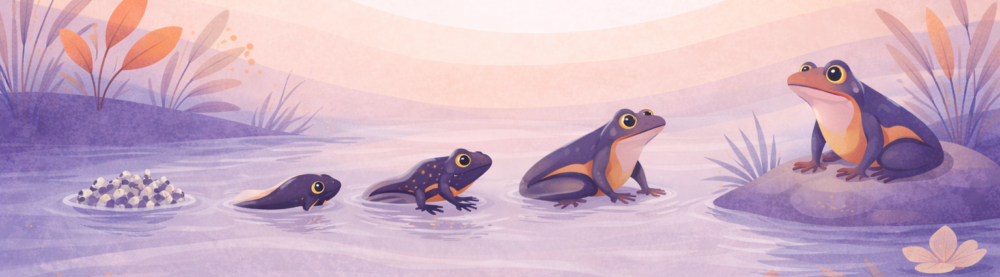
But something more than change was happening in that conversation. In the course of seeing her own immune system, Brené wasn't just removing a barrier. She was beginning to hold her own commitments — to discipline and to creativity — as objects she could examine and relate to, rather than as invisible forces running her. That's a developmental move, not just a behavioral one. It's the difference between getting a frog off a log and something more like metamorphosis.
Bob likes to ask audiences: do you want bigger, stronger caterpillars — or do you want butterflies? You can train people, equip them with better tools, send them to programs. They will become more capable versions of who they already are. But the moments that matter most — when someone needs to hold complexity they couldn't hold before, to see their own assumptions as assumptions rather than as reality — those moments call for a qualitative shift. Not improvement, but transformation. The Immunity to Change process is how that shift begins: what starts as practical work on a specific goal opens into a larger way of seeing oneself and the world.
This is what Bob and Lisa have been building toward across four decades and five landmark books — from The Evolving Self through An Everyone Culture. Bob developed the theory: that human beings continue to evolve in how they make meaning throughout adulthood, and that this evolution can be understood, supported, and cultivated. Lisa built the practice: the methodology, the training, the diagnostics, and the global community of practitioners who carry this work with rigor and care. Their partnership — the theorist and the pedagogue, the architect and the builder — is itself a model of the complementarity we are seeking to extend.
In Over Our Heads
Bob's 1994 book In Over Our Heads opens with a provocation: if contemporary life were a school, with all its demands and expectations as the curriculum, would anyone graduate? That question has only grown sharper. AI is not simply automating tasks. It is concentrating what stays human around the hardest parts of work — navigating ambiguity, making judgments no algorithm can make, leading through transformation rather than optimization. Every serious AI initiative we encounter is asking people to do a higher-level job, not just a different job.
And yet most organizations are already full — saturated with obligations, short on the capacity to absorb more change. When leaders say they want their people to "work differently with AI," they often mean it with total sincerity while simultaneously these same leaders protect the routines, the metrics and the understanding of what’s valued that hold the old ways of working in place. One foot on the gas. One foot on the brake.
Organizations that understand this become what Bob and Lisa call deliberately developmental — places where the daily fabric of work is designed so that people grow in the course of doing their jobs, where weaknesses are discussable and errors are treated as data, where development is not a program bolted onto the side of the business but its operating system. The strategies required to navigate the era ahead will fail unless the people charged with executing them are growing, continuously, into the leaders those strategies need.
A Mission with a Business
My friend Dov Seidman likes to distinguish between a business with a mission and a mission with a business. Minds at Work is the latter. What Bob and Lisa built is, at its foundation, a community of people committed to growing themselves and one another — faculty, certified coaches, practitioners in dozens of countries who carry this work into hospitals, schools, boardrooms, and government agencies with shared commitment to human development as a rigorous practice.
Our commitment as stewards is to deepen the intellectual foundations, strengthen the community, and build the technology and infrastructure that enable deliberately developmental practices to scale — all in the spirit of care and rigor that Bob and Lisa established over four decades.
Four of the areas in which we will be most focused on in the coming months is:
Building on all we’ve learned over the past year plus of intensive partnership to go deep with a handful of large enterprises with the commitment to bring Immunity to Change and developmental practices into the heart of how they transform.
Deepening our work on the application of Immunity to Change to the specific opportunities and challenges arising as AI transforms knowledge work
Bringing our own AI innovation efforts, focused on creating an AI that engages individuals in powerful conversations about change, “out of the lab” and into application within organizations that have also invested in human community and scaffolding
Embarking on new research and thought leadership efforts, including exploration of how leaders develop beyond self-authorship to the further, rare developmental stage of the self-transforming mind
We’re excited to hear from our community of clients and collaborators on any mental sparks that fly as we share this news, and especially interested in conversations that touch on these four focal points.
I look forward to sharing often what we’re learning on this journey ahead. In the meantime, we’re enjoying our adventures, seeking a world in which every frog gets off its log, in which even the butterflies endeavor toward some next and greater version of themselves.